
Space For Everyone
NEWS & EVENTS

HAYABUSA2 RETURNS TO EARTH
December 6th, 2020
The probe returned to earth carrying the space rocks from the asteroid Ryugu on December 5th at 2:30 AM. This JAXA probe completed it's 6 year journey and returned with never before seen samples.
Asteroids are generally assumed to be as a hard rock material, with rough surface texture. But Japan’s space mission Hayabusa2 has revealed that the carbon-rich asteroid Ryugu’s surface is porous and light, thus throwing in new details into the theories on the formation of celestial bodies.

THE ASTRA CLUB'S SPACE WEEK EVENTS AND COMPETITIONS
October 5th, 2020
The Astra club has decided to conduct some events and competitions along with the 2020 Induction during World Space week ( 7th to 10th October, 2020).
Click the below button to register or select the word ' Submit ' to submit your entries for the competitions.
The registration form will contain all the required information. For any queries, chat through the 'Members Chat'. Or reach us through our event organizers
Shruti: +91 83007 26541
Shyamala: +91 86109 45515

PHOSPHINE FOUND ON VENUS
September 14, 2020
The detection of phosphine in Venus’ atmosphere was one of those quintessential moments in space science. It was an unexpected discovery, and when combined with our incomplete understanding of planetary science, and our wistful hopefulness around the discovery of life, the result was a potent mix that lit up internet headlines.
While the discovery has led to a lot of conjecture, some of it over the top, it’s still an intriguing discovery. With further study, we’ll either eventually find an organism somehow creating the phosphine, or we’ll learn something more about Venus that we didn’t know.
A new study proposes an abiotic source for Venus’ phosphine: volcanoes. It’s titled “Hypothesis Perspectives: Might active volcanisms today contribute to the presence of phosphine in Venus’s atmosphere?” The authors are Ngoc Truong and Jonathan I.
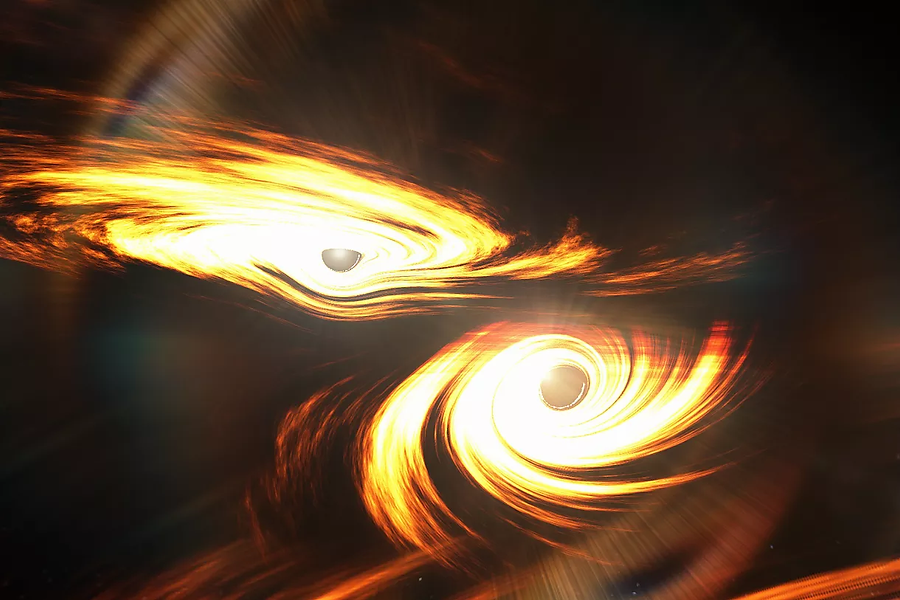
ASTRONOMERS SAY THEY’VE DETECTED THE MOST MASSIVE MERGER OF TWO BLACK HOLES EVER DISCOVERED
Sep 2, 2020, 8:00 am EDT
Astronomers may have detected the most massive collision of two black holes ever discovered, a chaotic merger that occurred some 7 billion years ago, the signs of which have only just reached us. The cataclysmic event offered researchers a front-row seat to the birth of one of the Universe’s most elusive objects.
The distant show included two major players: one black hole roughly 66 times the mass of our Sun, and another black hole roughly 85 times the mass of our Sun. The two came close together, rapidly spinning around one another several times per second before eventually crashing together in a violent burst of energy that sent shockwaves throughout the Universe. The result of their merger? One single black hole roughly 142 times the mass of our Sun.